
“Whoever humbles himself like this child
is the greatest in the kingdom of heaven.
And whoever welcomes a little child like this
in my name, welcomes me.”
-Christ
We may have grown tired and fatigued in this difficult life, becoming discouraged and even cynical, but we are often lacking a necessary element of joy: innocence.
If you find it hard to see beauty in this world, if think you cannot see the Kingdom of Heaven here on this earth, then look again. Look with the eyes of a child. Through them, the world is full of hope and dreams, mystery and joy. This means something, and it should not be dismissed as a passing phase. Children have something we should never lose, they understand what many of us have forgotten: not bogged down by resentment, anxiety, or suspicion, they maintain their innocence. They can still see beauty and order all around them… They can still see God.
The children’s television host Fred Rogers spent his entire career teaching the importance of imagination, playfulness, and the unique place children inhabit in our lives. The sensitive, wonderful world of children requires a level of innocence and trust that are often discarded when we enter adulthood. We mistakenly believe that we are now on our own, and that the time for playfulness has ended. But adulthood is not about learning to rely on ourselves, or facing the world alone. Adulthood is the transfer of our trustful abandonment from our parents to God. In childhood, we gradually learn how to become independent, one step at a time. So, it should not be surprising that in adulthood we continue that same process. It is in our attempts to acquire total control that we become anxious and turn toward ourselves for reliance that we lose our innocence. This path of anxiety leads to what we have all tasted of loneliness, cynicism, and some of us, even addiction.
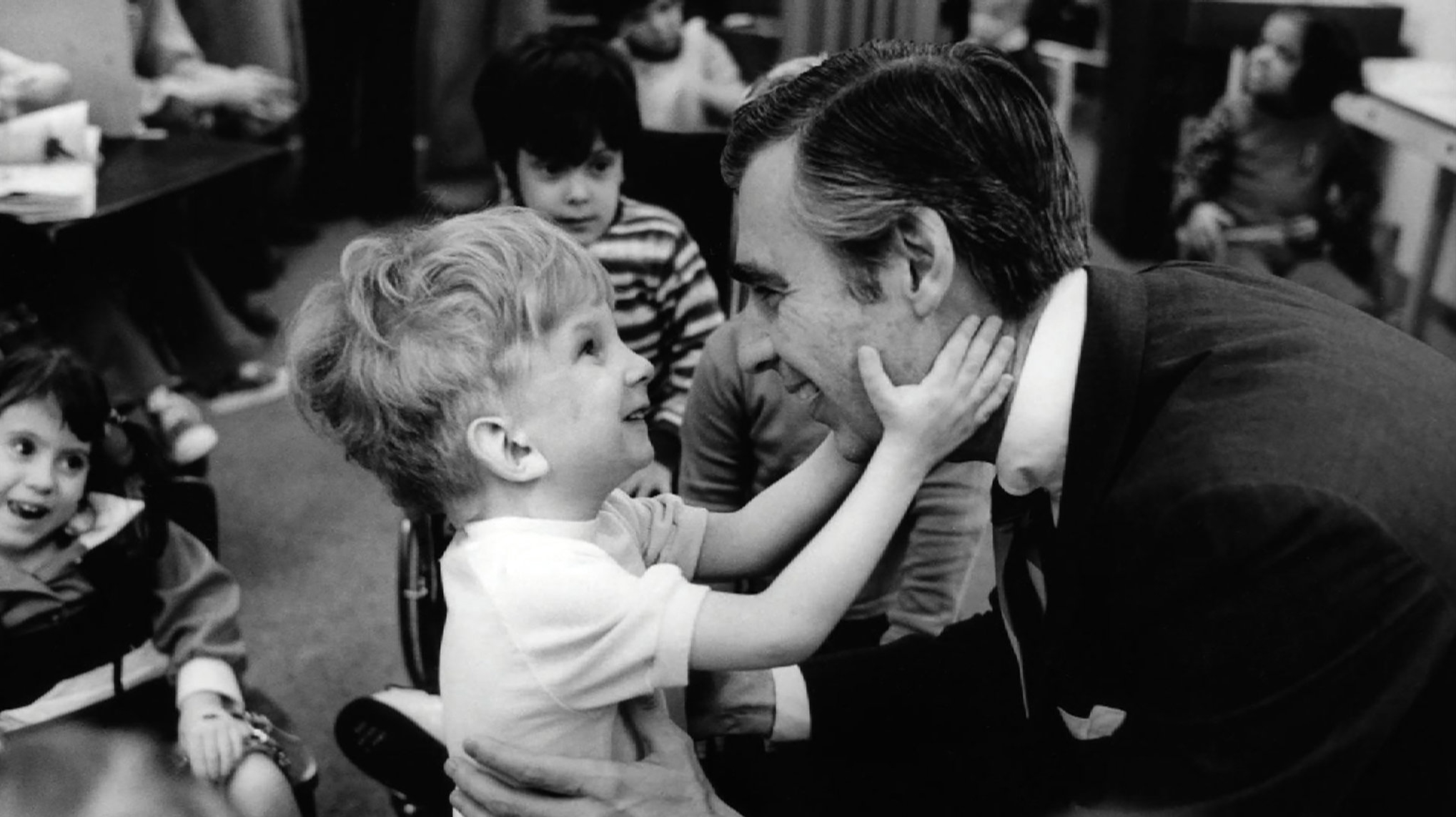
Cynicism is the distrustful belief that people only act out of self-interest. This causes suspicion of others and bitterness toward life. It often infects us undetected, subtly affecting our temperament and our relationships with others. It makes us defensive and cold. It becomes the log that Christ warns us about when he asks, “Why do you look at the speck that is in your brother’s eye, but do not notice the log that is in your own eye?” Cynicism turns our eyes away from our own faults and onto the faults of others. It is really a way of coping with our own shortcomings. This distrustful attitude causes a harsh, judgmental disposition toward the world and other people. Cynicism kills the flame of life in our soul, the soul of the inner child. It stomps out that youthful wonder and curiousness toward the world we once had, blinding us from seeing the sacred and precious life inside of others.
Cynicism is the opposite of love, for, “Love is patient and kind; love does not envy or boast; it is not arrogant or rude. It does not insist on its own way; it is not irritable or resentful; it does not rejoice at wrongdoing, but rejoices with the truth.” Cynicism cannot believe in love, since it does not trust in another person’s capacity for self-giving — thus it cannot grasp the profundity and sweetness of love. Instead, it guards against and feels confused or threatened by acts of love. This is the greatest tragedy of the curmudgeon personality — their inability to be loved. For, truly, who can love who has not first been loved? It may take an act of God to knock a cynic on his butt and show him that love is real and all around him. I know it did for me.
This is what makes the classic Charles Dickens tale, A Christmas Carol, so brilliant. Dickens captures the tragic, isolating loneliness of cynicism in Ebenezer Scrooge’s greed. It then proceeds to emphasize the spiritual power of reflecting on our own childhood — its joys, dreams, and wonders — and the transformative experience of being around children: in his case, Tiny Tim.
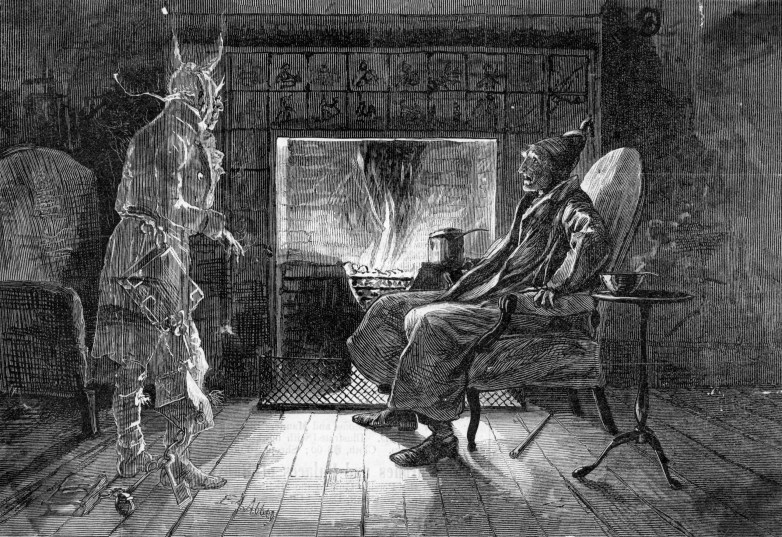
In a similar light, the iconic Russian author Fyodor Dostoevsky remarks, “The soul is healed by being with children.” It’s true. Children radiate the mysterious power of innocence, and often increase in us the desire to be good. Truly, a world without children is a hopeless world, in every way. Without children humanity would literally cease to exist, and without them we would certainly forget about the power of innocence and faithfulness. We would also forget about the beauty of play, which is something they love to do. There is something to playing that is pitifully overlooked today. In play, we ignite our imaginations in service of the child. We become fools for kids, so to speak, and this is a great virtue. We are far too hesitant look foolish in this age of cynics. Faith, love, and playfulness all look foolish to the modern cynic.
In love there is much playfulness, even in romance. Playfulness is one of the greatest signs of trust and life. The inner flame of life shines brightest in the midst of play. The innocent can freely play and create without the stoic conviction of practicality. Play and imaginative creation require a love of innocence and simplicity, it does not concern itself with time, money, or anxiety. True innocence is carefree because it is pure, it rests in the limitless love of God’s Will. Cynicism is imprisoned in the claustrophobic cell of its own will, anxious and reliant on itself.
My own journey of working through my cynicism is ongoing. It started with the film A Beautiful Day in the Neighborhood, a true story about acclaimed journalist Tom Junod’s transformative encounter with Fred Rogers, who turns out to be the same person in real life as he is on television. In the film, the gentleness, playfulness, and deep consideration for others that Mr. Rogers displays wrecks the journalists cynical worldview (inherited by trauma and tragedy) that people are ultimately selfish. He realizes just how good and true people can be, especially children. “Remember your childhood,” says Mr. Rogers. And, like the lead character, I was prompted to reflect on my own childhood.
As an adolescent I was sensitive, creative, innocent, and full of excitement about life. The world was not a malicious, ugly place; it was full of hope and dreams. At first, I loved and trusted others. I created art and shared it with classmates. The trees walked and the stars spoke to me. Books came alive, and I created entire worlds in my head. I was not naïve, I was simply alive to the mysteries of the world.
But as the insidious effects of abuse and trauma set in, I became defensive, suspicious, and fearful. I turned more and more from God to self for regulation. And I have defensively pursued a false sense of security there ever since, with no fulfillment. Reflecting upon this time in my life helped me see myself as a unique person worth nurturing and loving. I did not realize it, but for years I have viewed myself as some vague shape amidst a static background, where nothing was quite real. It has been a maddening and lonely place, where many others reside today. Remembering my childhood dreams has helped me view myself as a whole, cohesive person: a unique creature designed by God, with unique dreams, feelings and tastes that make me.
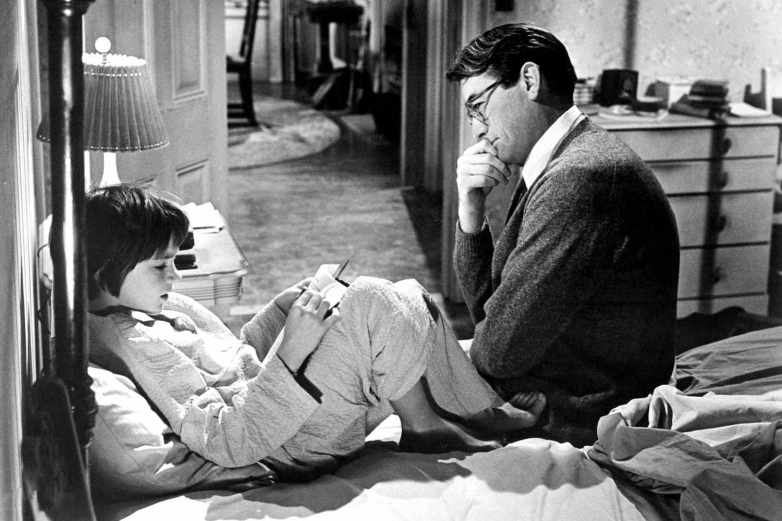
read in To Kill a Mockingbird.
Upon this realization, I revisited my most cherished film of my childhood, To Kill a Mockingbird. I was overjoyed to discover that the boy was not lost within the old man. The film still produces the same wonders and hopes as before, and now with the new desire to attain the simplicity and innocence present within its frames. As a 10 year old, Gregory Peck’s profound performance as Atticus introduced me the virtue and power of fatherhood. This was the first time I realized that I wanted to be a father — a privilege I have since inherited. I got to sit next to my little boy and watch him gaze at the very images that once inspired such great hope inside me.
When we reflect back on our state of innocence in childhood, of purity and trust, we can all get a glimpse at how simple life can really be, even if we only had glimpses of awe. We must embark on this journey of childlikeness to allow ourselves to be loved, because we want to learn how to love. And once we grasp it we must hold onto that childlike innocence and simplicity no matter what trials come our way. We owe it to our children to maintain this innocence and playfulness: a clean and sober heart, free from suspicions and resentments.
It is not out of naïveté that our children expect us to be good, honest, and faithful. It is because that is our duty to them. It is because that is what we were made to be.
Subscribe below for more to come.

 The Art of Hope