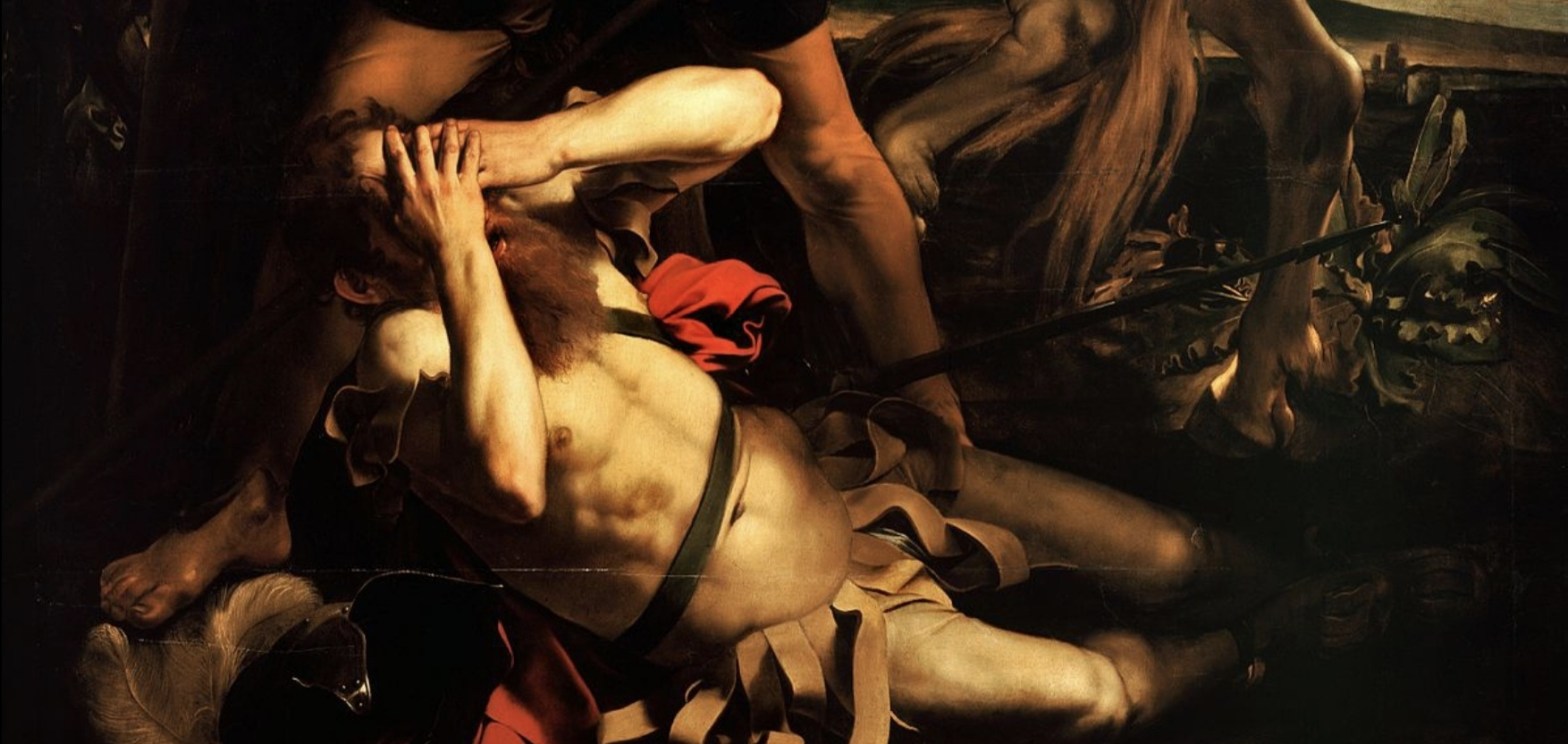
To despair is to turn your back on God.
Despair (the demon of addiction, suicide, and self-destructive behavior) often comes to us in three shapes. I have given these shapes three symbols: the midnight ghoul, the werewolf, and the plague. These three shapes actually have no power over us unless we grant them entry (by our Will) into our emotional lives. Once we entertain them, they take ahold of us in dark and blinding ways.
Despair is the twisted path of those who act as if there is no God, or that God has abandoned them. It is a dark feeling that springs from suffering and presents itself to us as an ultimatum: to maintain our faith in God’s providence OR to declare him dead and act on our own will. It can last a moment, or, if habituated, it can become part of our personality. It can lead to one bad decision, or destroy our life and family. We are all susceptible to it, at any given moment.
Despair leads to atheistic thoughts and impulsive actions that are often damning to our well-being and to our perception of reality. It twists the world and makes us feel justified in our crusade against it. It is the cause of small and great evils alike. It can cause us to commit adultery, to break solemn promises, to abandon our faith, and even to take our own lives or another’s.
Firstly is the midnight ghoul, or the vampire, who feeds upon us at our lowest point: in our sadness. This is the one I battle most. It breaks us down and fills us with self-pity, seeking to overtake our Will in an episode of wreckless depression. In the despair of sadness we abandon all hope of reconcilation, of healing, and the hope of heaven. We proclaim there is no answer and no solution, and thus no God.
Sadness is a natural feeling, but we must always be on guard to not let our sadness turn into despair, where we make wreckless decisions or alter our worldview in a moment of passion. It is the most unsuspecting of the three: sly, quiet, and in the darkness. This lurking midnight ghoul seeks to make us feel justified in our despair, so that we may forsake God’s existence or declare him evil because of our suffering. Then, this passion takes control. And a moment, or a lifetime, of self-destruvtive thoughts or actions begins. The vampire is fitting, as it fills us with hopelessness and despair in order to break us down and let it feed upon our blood (our life).
Secondly is the werewolf: the despair of anger, which leads to wrath. When something happens that disrupts our peace or our selfish pleasure, a beast inside us awakens and we act out in hatred, in narcissistic passion, with the selfish proclamation, “MY will must be done!” When we act in our anger we seek to dominate others though fear: in raising our voices, using curses, or using physical violence. When done in anger, everything we do is violence against others, for Chirst himself proclaims that to hate your brother is to murder them in your heart.
Contrary to our intentions, wrath actually unveils deep insecurities and a sensitivity rather than dominance and strength. Anger is natural, but acting upon it is a great and dangerous sin. Within a split second we have despaired and made ourselves God. If this behavior is habituated we may struggle to ever humble ourselves before God and his Will, declaring ourselves higher than he. In wrath there is great pride and a very dark selfishness.
Lastly, the plague: the despair of adversity. The plague (or illness) can strike at any moment. It could be an injury or chronic illness, your child becoming very ill, the loss of our job… or much worse. Many of us are not equipt to handle these terrible adversities, but we should be. We should never ignore these possible realities, for to do so sets us up for despair and hopelessness. It is a weakness to ignore these realities, or to not be able to cope with their possibilities. Death, illness, and poverty cannot be solved by political means, these things are meant to turn us to God. But instead we ignore them or push them out of our minds. And when the earthquake hits, we abandon God as if he hasn’t made these impending dooms clear to us as possible effects of this life.
Death, illness, and poverty were a much bigger part of life before this last century, yet people were more faithful to God than ever, because these realities are directly connected to our fall from grace. This was deeply understood and even more deeply felt. You could not succumb to despair at the death of a child or when falling into poverty… Divorce and suicide rates would have been far higher. But, instead, at the height of human wealth, divorce and suicide are NOW at their highest. We have abandoned an essential human element of our lives: God. He is not merely a fantasy conjured as a crutch, but a necessary element of our intellectual and spiritual makeup to maintain our stability and mental health as individuals and as a society.
I write this as someone who is aquatinted with these dark shapes and their dangerous consequences. I have been fascinated by the use of symbols such as these to help describe and understand them, a point of literature throughout history. Symbols give visual reprentations to deeply complicated ideas and help engrain them in our memories.
“To despair is to turn your back on God,” exclaims the stern Marilla Cuthbert to the emotional rollercoaster that is Anne (in the charming mini-series Anne of Green Gables.) The statement sustains a lot of weight, and should be shouted from the rooftops.
May we all tread the murky waters of this life carefully, and never let passion overtake us. May we live out our natural faith in God and never take our eyes off him, or forget his mysterious, unwavering love for us.
“Humble yourselves therefore under the mighty hand of God, that in due time he may exalt you. Cast all your anxieties on him, for he cares about you. Be sober, be watchful. Your adversary the devil prowls around like a roaring lion, seeking some one to devour. Resist him, firm in your faith, knowing that the same experience of suffering is required of your brotherhood throughout the world. And after you have suffered a little while, the God of all grace, who has called you to his eternal glory in Christ, will himself restore, establish, and strengthen you.” -The first letter of Saint Peter, Ch. 5.

 The Art of Hope